
Amadeo Giannini
Founder of Bank of America, pioneer of modern banking for the middle class.

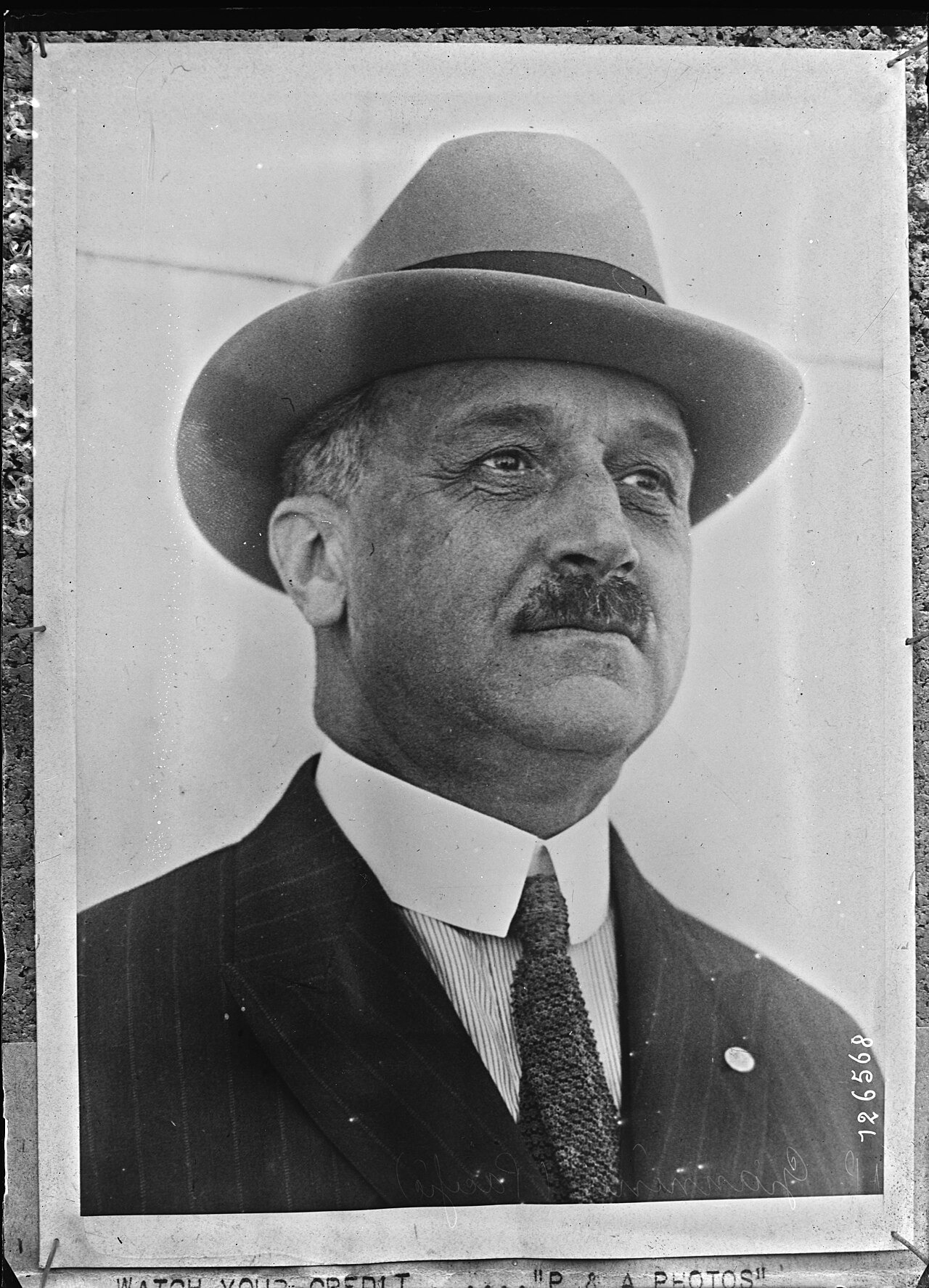
Pacific and Atlantic (Agence photographique). Agence photographique pour le docu · Public domain
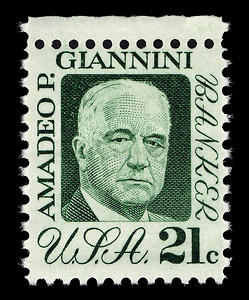
Amadeo Pietro Giannini was an American banker who founded the Bank of Italy, which eventually became Bank of America. He is credited as the inventor of many modern banking practices, notably being one of the first bankers to offer services to middle-class Americans, mainly Italian immigrants, rather than only the upper class. He also pioneered the holding company structure and established one of the first modern trans-national institutions.
- born
- May 6, 1870
- died
- June 3, 1949
- field
- Banking
- nationality
- American
- known_for
- Founding Bank of Italy (later Bank of America); pioneering branch banking and ho
Verified Timeline
Lore & Background
Amadeo Pietro Giannini was born in San Jose, California, to Italian immigrant parents. Giannini dropped out of Heald College in 1885 to work as a produce broker for L. Scatena & Co. He married Clorinda Cuneo in 1892 and retired at age 31 to administer his father-in-law's estate. He later became a director of Columbus Savings & Loan, but quit after clashing with directors who did not share his vision of serving immigrants. He founded the Bank of Italy in San Francisco on October 17, 1904, in a converted saloon, targeting the 'little fellow.' Deposits on the first day totaled $8,780, and within a year soared above $700,000. After the 1906 earthquake, Giannini moved the bank's money to his home in San Mateo using a garbage wagon, then operated from a plank across two barrels in the street, making loans on a handshake. He introduced branch banking after 1909 legislation, opening the first branch outside San Francisco in San Jose in 1909. By 1916, he had expanded to several branches, eventually buying banks throughout California.
Reader's Guide
Giannini's significance lies in democratizing banking by serving middle-class and immigrant populations, a radical departure from the era's focus on the upper class. His use of branch banking stabilized banks during difficult times and expanded capital bases. The merger with Bank of America, Los Angeles in the late 1920s created a network with over 400 banking offices in California, pioneering centralized processing and bookkeeping. Giannini's legacy includes nurturing the motion picture and wine industries, lending Walt Disney the funds to produce Snow White, buying the bonds that financed the construction of the Golden Gate Bridge during the Great Depression, bankrolling Henry Kaiser's enterprises during World War II, and providing capital to William Hewlett and David Packard to help form Hewlett-Packard. His holding company, Transamerica Corporation, was later separated from Bank of America by the Bank Holding Company Act of 1956. His San Mateo estate 'Seven Oaks' is on the National Register of Historic Places, and his name is memorialized in a San Francisco plaza, A.P. Giannini Middle School, and the Giannini Foundation of Agricultural Economics at UC Berkeley.
Did You Know?
- Giannini moved his bank's money to his home in San Mateo after the 1906 earthquake using a garbage wagon, with the cash hidden beneath garbage.
- He made loans on a handshake after the 1906 earthquake, operating from a plank across two barrels in the street, and later said every loan was repaid.
- Giannini lent Walt Disney the funds to produce Snow White, the first full-length animated motion picture made in the US.
- During the Great Depression, he bought the bonds that financed the construction of the Golden Gate Bridge.
- He provided capital to William Hewlett and David Packard to help form Hewlett-Packard.
Roots in the Santa Clara Valley
Amadeo Pietro Giannini entered the world on May 6, 1870, in San Jose, California, the first son of Luigi Giannini and Virginia Demartini. His father had crossed the Atlantic from the Ligurian hills near Genoa, drawn by the 1849 gold rush, and eventually settled the family on a forty-acre produce farm at Alviso. That chapter ended in 1877 when Luigi was fatally shot by an employee over a wage dispute, leaving his widow to raise two children while pregnant with a third. Virginia kept the farm running and later married Lorenzo Scatena, whose produce company would become young Amadeo's first employer. After a brief stint at Heald College, Giannini dropped out in 1885 to work as a produce broker, commission merchant, and dealer across the Santa Clara Valley. He proved remarkably successful in that trade. In 1892 he married Clorinda Cuneo, daughter of a San Francisco real estate magnate, and by thirty-one he had sold his business interest to his own employees and retired to manage his father-in-law's estate. It was through that estate that he first encountered the world of banking.
A Bank for the 'Little Fellow' and the Great Fire
On October 17, 1904, Giannini opened a small bank in a converted saloon in San Francisco's Jackson Square neighborhood. His vision was radical for the era: serve the hardworking Italian immigrants and other middle-class residents whom established institutions had long ignored. First-day deposits came in at a modest $8,780, yet within a year the figure had surged past $700,000. The bank's true test arrived with the 1906 earthquake and the fires that followed. Before the flames reached the financial district, Giannini had his vault's cash loaded onto a garbage wagon and driven eighteen miles to his home in San Mateo, concealed beneath refuse. While rival banks' vaults were so heat-damaged that they had to remain sealed for weeks, Giannini set up a makeshift counter—literally a plank laid across two barrels on the street—and continued accepting deposits and issuing loans. He extended credit on a simple handshake to anyone willing to rebuild the city. He later recalled that every single one of those loans was repaid. In a gesture of gratitude, he promised the garbage man who had hauled his bank's assets that his son would receive his first job at fourteen.
From Branch Banking to a National Institution
Giannini recognized early that a single-location bank was vulnerable to local economic shocks. When California passed legislation permitting branch banking in 1909, he moved swiftly, opening his first out-of-city branch in San Jose that same year. By 1916 the network had grown to several additional locations, and over the following years he acquired banks across the state until Bank of Italy operated hundreds of branches throughout California. His reasoning was both defensive and expansive: a broad branch network stabilized the institution during downturns while simultaneously enlarging its capital base. The next leap came in 1923, when he began investing in Bank of America, Los Angeles, a venture originally established by Orra E. Monnette. Los Angeles's conservative business climate had been less welcoming to Bank of Italy, and the new name captured a broader, more aspirational mission. By 1929 the combined institution commanded more than four hundred offices in California. Crucially, it became the first bank to implement centralized processing, bookkeeping, and cash delivery across its network, a structural innovation that allowed it to weather localized economic troubles far more effectively than single-city rivals.
Beyond the Vault: Cultural Patronage and Lasting Legacy
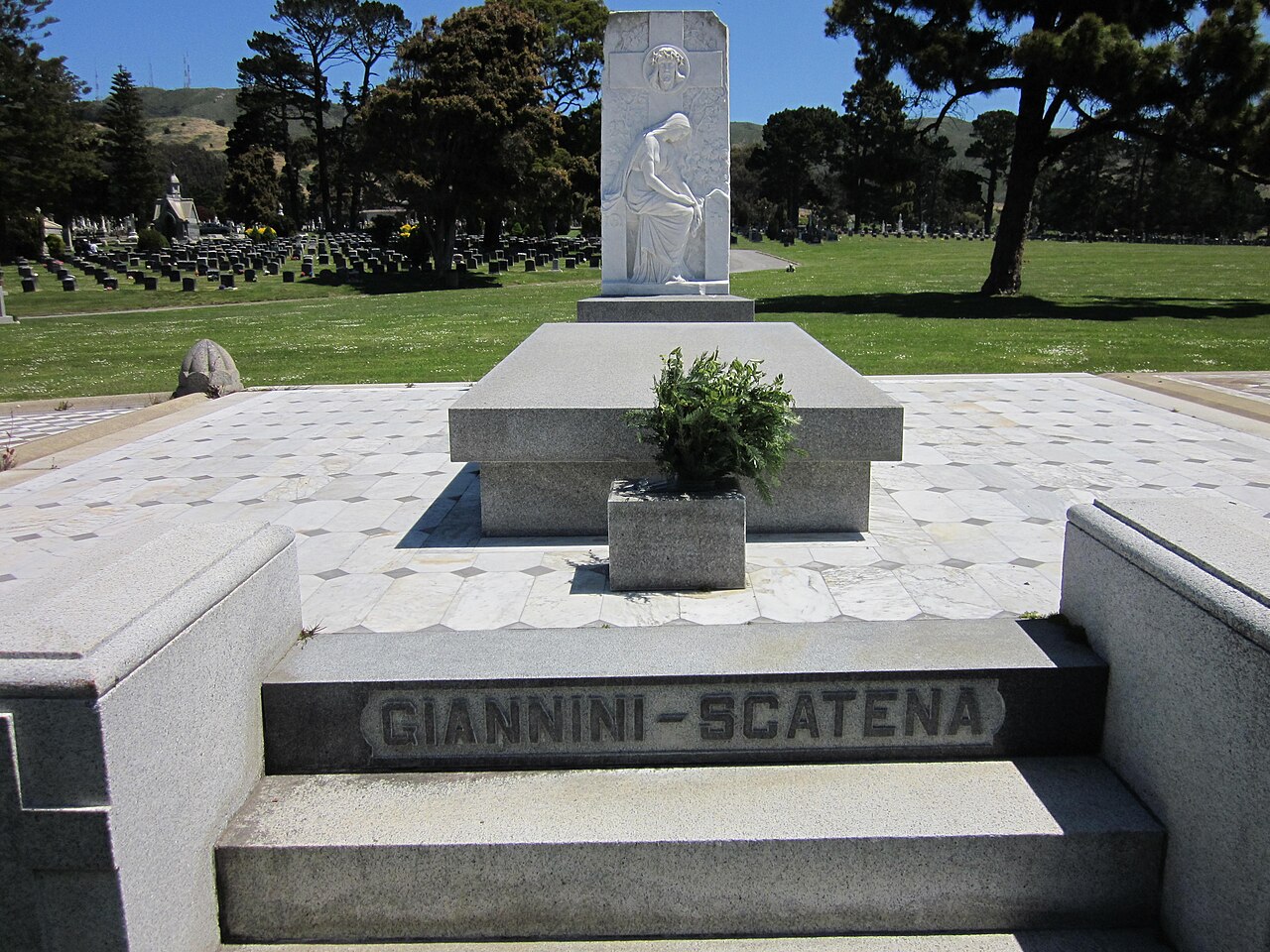
Giannini's influence stretched well beyond the banking floor. He is widely credited as the inventor of numerous modern banking practices, including the holding company structure and the establishment of one of the earliest trans-national banking institutions. His commitment to the communities he served extended into the cultural sphere: he provided Walt Disney with the financing needed to produce Snow White, the first full-length animated feature made in the United States. During the depths of the Great Depression, he purchased the bonds that funded construction of the Golden Gate Bridge, a gesture that tied his name to one of California's most iconic landmarks. He also served as an original board member of the Italian Board of Relief, founded in 1916, a nonprofit that still operates today under the name Italian Community Services. Historian Irving Katz attributed Giannini's extraordinary career to a rare blend of boundless energy, keen insight into human nature, entrepreneurial brilliance, and aggressive timing. Giannini remained chairman of Bank of America until his retirement in 1945, and he passed away on June 3, 1949, leaving behind a banking philosophy that had permanently shifted the industry toward serving ordinary Americans rather than exclusively the wealthy elite.
Gallery
Frequently Asked Questions
Who is Amadeo Giannini?
Amadeo Pietro Giannini (1870–1949) was an Italian-American banker who founded the Bank of Italy, the institution that would later become Bank of America. He is broadly regarded as one of the architects of modern American retail banking.
What is Amadeo Giannini most famous for?
He is credited with opening banking services to everyday working families and immigrant communities rather than restricting them to wealthy elites. He also introduced the holding company structure and helped build one of the earliest trans-national banking institutions.
How did Giannini's approach to banking differ from his contemporaries?
Where most banks of his era served only the upper class, Giannini deliberately extended credit and savings products to middle-class Americans, especially Italian immigrants. This inclusive, branch-based model became a blueprint for the modern retail bank.
What happened to the Bank of Italy after Giannini founded it?
The institution grew into a major financial player and was eventually rebranded as Bank of America, one of the largest banks in the United States. Giannini's original vision of accessible, neighborhood-level banking shaped the institution's long-term identity.
Why is Amadeo Giannini considered important in financial history?
He is recognized as a key figure who democratized access to banking in America, extending services to people who had previously been ignored by the financial system. His innovations in branch networks, holding company structures, and trans-national operations laid groundwork for the modern banking industry.
More in Business Magnates And Industrialists 1-20
Spotted an error? Know more?
This is a living reference — every entry is fact-audited, and reader corrections feed straight into our audit queue. Suggest an edit · See this site's audit record